

A friend of mine, a fintech professional relocating from Mumbai to take up a role inside GIFT City’s IFSC, called me last month with a fairly simple question: “What’s the actual price per square foot here? Every website tells me something different.”
He wasn’t wrong to be confused. Search for gift city apartment price per sq ft and you’ll find numbers ranging from ₹8,000 to ₹18,000, all claiming to be “current.” The truth is that both figures can be accurate – they’re just describing different buildings, different construction stages, and different parts of a city that’s still being built out floor by floor.
That’s really why so many buyers, investors, NRIs, and working professionals search for this number before they search for anything else. Price per square foot is the fastest way to sanity-check a deal, compare projects, and figure out whether a quoted price is fair or inflated. It’s a useful shorthand – but it’s only ever a starting point. Two apartments at the same rate per sq ft, in the same tower, can turn out to be very different investments once you factor in floor level, view, carpet-to-built-up efficiency, amenities, and how close possession actually is.
This guide walks through where GIFT City’s residential prices stand today, how they got here, what’s likely to move them next, and how to think about a purchase decision in 2026 – whether you’re buying a home to live in or an asset to hold.
What Is the Current Price Per Sq Ft in GIFT City?
As of 2026, gift city apartment prices for standard residential apartments typically fall in the ₹10,000–₹12,000 per sq ft range, with several listings clustering close to ₹10,500–₹11,000 on a built-up basis. That’s the number you’ll see most often quoted as the “average” across the city’s residential clusters.
But averages hide a lot. Premium and high-rise projects – the ones with sky lounges, larger floor plates, GIFT SEZ-facing views, or a marquee developer name attached – routinely command more, sometimes running well past ₹15,000 per sq ft for the most sought-after floors and configurations. On the other end, early-stage or newly launched under-construction projects, particularly ones released in phases, can still be booked closer to the lower end of the range, since developers tend to price the first tranche of units more attractively before demand pushes rates up in later phases.
A few things genuinely move the needle on property price in gift city:
Developer track record. A builder with a history of on-time delivery and strong resale performance in GIFT City can price a comparable unit higher than a lesser-known name – and buyers are usually willing to pay that premium for the reduced execution risk.
Construction stage. Pre-launch and early under-construction inventory is almost always priced below ready-to-move stock, because the buyer is taking on timeline risk that a completed building doesn’t carry.
Amenities and specifications. A project with a full clubhouse, landscaped decks, dedicated concierge, and higher-spec fittings will sit above a more basic development, even if both are technically “2 BHK” listings.
Configuration and carpet efficiency. Larger units with better carpet-to-built-up ratios often command a slightly better effective rate, since buyers are paying less for unusable common-area loading.
View and floor. Units facing the SEZ skyline, the riverfront side, or upper floors with unobstructed views are priced at a visible premium over lower, blocked-view units in the same tower.
Location within GIFT City. Proximity to the metro spur, walk-to-work distance from the IFSC towers, and adjacency to social infrastructure like schools and retail all factor into how a specific pocket is priced relative to the rest of the township.
So when someone asks “what’s the price per sq ft in GIFT City,” the honest answer is: it depends on which GIFT City you’re buying into. There is no single number – there’s a range, and where a project sits in that range tells you almost as much as the number itself.
Price Trend: From Early Years to Today
It’s worth zooming out, because the trajectory here matters more than any single snapshot.
The early years (around 2019–2020). GIFT City was still largely a promise on paper for residential buyers. Very few completed towers existed, most of the activity was concentrated on the commercial and SEZ side, and residential rates hovered in the ₹4,000–₹5,000 per sq ft range. Buyers at that stage were essentially betting on a master plan rather than a functioning neighbourhood.
The growth phase (2021–2024). As the IFSC began signing up global banks, insurance firms, and fintech companies, and as the first residential towers actually got handed over, sentiment shifted from speculative to genuinely demand-driven. Corporate hiring inside the SEZ created a real, immediate need for housing close to work, and prices moved up accordingly – climbing steadily as each new phase of supply got absorbed faster than the one before it.
Where things stand now (2026). GIFT City has moved from being an “emerging” address to something closer to a maturing one. Residential rates have roughly doubled – and in some premium pockets, more than doubled – from where they stood five years ago, landing in that ₹10,000–₹13,000 standard band, with high-rise and luxury stock stretching further. Occupancy is real, not aspirational; a meaningful share of buyers today are end users or corporate-linked tenants rather than pure speculators.
Looking ahead. Prices could continue to firm up as metro connectivity extends further, as more corporate leases get signed inside the SEZ, and as the ratio of completed, livable inventory to total planned residential stock stays tight. That said, this isn’t a guarantee – appreciation in any market depends on execution timelines, broader economic conditions, and how much new supply gets released. Buyers should treat future growth as a reasonable expectation, not a fixed outcome.
What Actually Drives Property Prices in GIFT City?
It helps to understand the underlying demand engine, because it explains why prices have behaved the way they have – and gives you a sense of what to watch going forward.
IFSC status. GIFT City remains India’s only International Financial Services Centre, which gives it a regulatory and tax positioning that no other Indian city currently replicates. This uniqueness is the foundation of almost everything else on this list.
Corporate demand. Global banks, asset managers, insurance companies, and fintech firms have steadily set up shop inside the SEZ. Every new large lease effectively adds to the pool of employees who need to live somewhere nearby, and many companies now offer housing support specifically to keep talent within a short commute of the towers.
Employment growth. As the financial and IT ecosystem inside GIFT City expands, so does the working population that needs housing – not eventually, but immediately, since most of these are relocation-driven hires.
Residential demand versus supply. A large share of GIFT City’s master plan is allocated to commercial and institutional use, which means the residential footprint is comparatively limited. When housing supply is structurally capped in a location with growing employment, prices tend to firm up faster than in cities where land is abundant.
Government initiatives. Continued state and central government backing – from infrastructure spending to policy support for the IFSC – keeps investor confidence anchored, even during broader real estate slowdowns elsewhere.
Connectivity. The Ahmedabad Metro extension linking GIFT City to Gandhinagar and Ahmedabad, along with highway access via SG Highway, SP Ring Road, and NH48, has meaningfully reduced the “middle of nowhere” perception the township carried a few years ago.
Developer reputation. Established names bring delivery credibility, and buyers consistently pay a premium to reduce the risk of project delays.
Amenities and construction quality. Clubhouses, security infrastructure, sustainable building design, and finish quality all factor into how a project is positioned and priced relative to its peers.
Together, these forces explain why GIFT City hasn’t behaved like a typical satellite township. It’s being priced more like a specialised employment hub with constrained housing supply – closer to how a financial district commands a premium in other global cities.
Under-Construction vs Ready-to-Move: Which Makes More Sense?
This is one of the most practical decisions a buyer in GIFT City has to make, and there’s no universally correct answer – it depends on your risk appetite and timeline.
| Factor | Under-Construction | Ready-to-Move |
| Entry price | Generally lower, especially in early launch phases | Higher, reflects completed and de-risked asset |
| Potential ROI | Higher upside if the project delivers on time and demand keeps rising | More predictable, but less room for price appreciation before possession |
| Risk | Construction delays, changes in specifications, market risk over the build period | Minimal – you can inspect the actual unit before buying |
| Rental income | None until possession and completion | Immediate, if you plan to lease it out |
| Financing | Often structured as a construction-linked payment plan | Full payment or standard home loan disbursement at once |
| Best suited for | Investors with a 2–4 year horizon comfortable with some execution risk | End users who want to move in soon, or investors prioritising immediate rental yield |
For under construction flats in gift city, the appeal is straightforward: you’re buying at today’s price for a unit that will be delivered into what is likely a higher-priced market, assuming the broader growth trend continues. The trade-off is real, though – delivery timelines in any Indian market can slip, and specification changes between booking and handover aren’t unheard of. It’s worth checking the developer’s RERA registration and past delivery record before committing.
For ready to move flats in gift city, you’re paying for certainty. You can walk the actual unit, verify the view, check the finish quality, and – if you’re an investor – start earning rental income almost immediately given the strong tenant demand from IFSC employees. The entry price is higher, but so is the peace of mind.
If you’re an end user planning to actually live in GIFT City soon, ready-to-move usually makes more sense. If you’re an investor with a longer horizon and some tolerance for construction-period risk, under-construction inventory can offer a better entry point.
Price Comparison: GIFT City vs Ahmedabad vs Gandhinagar
It’s a fair question – why pay a premium for GIFT City when Ahmedabad and Gandhinagar are right next door with lower entry prices?
Ahmedabad offers a far larger, more established residential market, with prices in most premium localities generally running lower per sq ft than GIFT City’s standard band. Ahmedabad’s advantage is depth of choice, established social infrastructure, and a mature resale market. What it doesn’t offer is the specific IFSC-linked employment demand that’s driving GIFT City’s rental and appreciation story.
Gandhinagar, the city GIFT City technically sits within, has traditionally been a quieter, government-employee-driven market with comparatively modest price appreciation. It offers more affordable entry points but historically slower capital growth than what GIFT City has demonstrated over the past few years.
GIFT City, by contrast, is a planned, single-developer-vision township built around a specific economic driver – the IFSC. That focus is exactly why it commands a premium: limited residential land, high-density employment growth, and a tenant base with genuine corporate backing.
On investment potential, GIFT City currently shows the strongest combination of rental demand and price appreciation of the three, largely because its buyer and tenant pool is tied to a growing, well-capitalised industry rather than general urban migration. Rental demand specifically benefits from the “walk-to-work” dynamic – IFSC employees strongly prefer housing within a short commute, which keeps vacancy periods short for well-located units.
That said, lifestyle expectations differ too. Ahmedabad offers an established city experience: more restaurants, a larger schools network, deeper social fabric. GIFT City is still building that layer out, even as its physical and financial infrastructure matures quickly. Buyers who want a “finished” city today may still lean toward Ahmedabad; those willing to be early in a still-forming but fast-maturing address are the ones driving GIFT City’s demand.
Price by Apartment Type: Studio to 4 BHK
Studio apartments in GIFT City are aimed squarely at young professionals and first-time buyers who want proximity to work without the cost of a larger unit. They typically carry the lowest total ticket size in the market and tend to see strong rental interest from single professionals or those relocating without family, making them a reasonably liquid entry point for smaller investors.
1 BHK flats in GIFT City sit just above studios and are a popular choice for both young couples and investors chasing rental yield. Given the volume of single professionals and couples moving in for IFSC jobs, 1 BHKs tend to lease quickly, which makes them attractive for buyers prioritising consistent rental income over larger capital appreciation.
2 BHK flats in GIFT City are arguably the most in-demand configuration across the township – they suit small families, working couples wanting a home office, and investors who want a balance of rental demand and resale liquidity. This is usually the “safest” configuration for a first-time GIFT City buyer, since it appeals to the broadest tenant and resale pool.
3 BHK apartments shift the buyer profile toward established families and senior professionals who want more space, often prioritising view, floor level, and amenities over price efficiency. These units carry a higher ticket size but also tend to be favoured by senior executives on corporate housing allowances, which supports stable rental demand at the upper end.
4 BHK apartments represent the luxury end of GIFT City’s residential offering – larger floor plates, premium finishes, and typically the best views in a tower. These are less about rental yield and more about long-term capital appreciation and lifestyle, appealing to HNIs, senior leadership relocating with families, and NRIs looking for a flagship home.
If rental yield is your primary goal, 1 BHK and 2 BHK units generally offer the fastest and most reliable tenant absorption. If long-term capital appreciation and a premium lifestyle matter more, 3 BHK and 4 BHK units – particularly in well-located, reputed projects – tend to hold that positioning better over time.
Is GIFT City Expensive?
Compared to the rest of Gandhinagar, and even parts of Ahmedabad, yes – GIFT City sits at a premium on a pure price-per-sq-ft basis. That’s not really in dispute.
The more useful question is whether that premium is justified, and for most buyers evaluating gift city property investment, the answer leans toward yes – with context. You’re not just buying square footage; you’re buying into a planned township with international-grade infrastructure, proximity to India’s only IFSC, expanding metro connectivity, and a tenant base with genuine corporate backing rather than speculative churn. Rental yields in the 3–6% range, supported by consistent corporate-linked demand, are also meaningfully healthier than what many comparable urban residential markets in India currently offer.
Value, in other words, isn’t just about the entry price – it’s about what that price buys you in terms of demand certainty, infrastructure, and growth trajectory. GIFT City is expensive relative to its immediate neighbours. Whether it’s expensive relative to what it offers is a more favourable conversation.
Is Now a Good Time to Buy?
There’s no single answer here – it genuinely depends on who’s asking.
For investors, 2026 is being described by several market observers as GIFT City’s “institutional phase” – the speculative uncertainty of the early years has largely given way to real, employment-backed demand. That’s generally a healthier entry point than a purely speculative market, even if the easiest early gains have already been captured by those who bought in 2020–2021.
For end users, particularly those already working inside the IFSC or planning to, buying now removes the ongoing cost and inconvenience of a long commute, and locks in a home price before further appreciation – assuming that trend continues, which isn’t guaranteed but is reasonably well supported by current demand fundamentals.
For NRIs, GIFT City carries a specific appeal: it’s a modern, professionally managed township that fits the “lock and leave” investment profile many NRI buyers look for, combined with the specific tax and regulatory advantages associated with the IFSC ecosystem. It’s worth speaking with a qualified financial or tax advisor about the specifics of NRI investment in IFSC-linked property, since regulations here differ from a standard residential purchase elsewhere in India.
For working professionals relocating for a job inside GIFT City, the buy-versus-rent decision often comes down to how long you expect to stay. If it’s a multi-year commitment, buying can make sense given healthy rental demand as a fallback. If your tenure is uncertain, renting first and buying once you’re confident in your long-term plans is a reasonable, lower-risk approach.
For families, the decision leans more on lifestyle readiness than pure numbers – GIFT City’s social infrastructure (schools, healthcare, retail) is still maturing, even as the physical and financial infrastructure is well ahead of schedule. Families prioritising long-term settling in should weigh this alongside the investment case.
Who Should Invest in GIFT City?
The salaried professional building a first asset. Someone working in or around the IFSC, looking for a manageable-ticket 1 or 2 BHK that doubles as a home now and an asset later.
The rental-yield investor. Someone less concerned with living in GIFT City and more focused on consistent tenant demand – best served by 1 BHK or 2 BHK units in well-connected, amenity-rich projects.
The long-term capital appreciation investor. Someone comfortable holding for 5+ years, willing to consider under-construction inventory in reputed projects for a better entry point, betting on continued IFSC growth.
The NRI seeking a “lock and leave” asset. Someone who wants a professionally managed, low-maintenance property in a modern township, often combined with specific IFSC-related investment advantages.
The family planning a long-term move. Someone prioritising a larger 3 or 4 BHK configuration, likely looking at ready-to-move or near-completion inventory to reduce timeline uncertainty.
The HNI or senior executive. Someone drawn to the luxury end of the market – premium high-rise 3 and 4 BHK units with the best views and specifications, where lifestyle and status matter as much as yield.
Common Mistakes Buyers Make in GIFT City
1. Anchoring on price per sq ft alone. Two units at the same rate can differ hugely in carpet efficiency, view, and finish quality. The headline number is a starting point, not the full picture.
2. Not verifying RERA registration and project timelines. Every legitimate project in GIFT City should carry a valid RERA number – always check it independently rather than taking a broker’s word for it.
3. Ignoring the developer’s delivery track record. A lower price from an unproven developer can carry meaningfully more execution risk than a slightly higher price from an established one.
4. Confusing built-up area with carpet area. Built-up figures can make a unit look larger and cheaper per sq ft than the actual usable space justifies – always ask for the carpet area breakdown.
5. Underestimating additional costs. Registration, stamp duty, GST (where applicable on under-construction property), maintenance deposits, and parking charges can add a meaningful percentage on top of the quoted price.
6. Buying purely on rental yield projections without checking demand fundamentals. Yield estimates from a broker are only as good as actual tenant demand in that specific tower and configuration – cross-check with recent, comparable rental listings.
7. Overlooking floor and view differences within the same project. Buyers sometimes assume uniform pricing across a tower; in reality, floor level and view can shift the price meaningfully within the very same building.
8. Not accounting for possession timeline risk in under-construction purchases. A construction-linked payment plan that stretches years out carries genuine market and delivery risk – factor that into your decision rather than treating the current price as locked-in value.
9. Skipping a site visit before finalising. Especially for under-construction units, seeing the actual site, current construction stage, and surrounding development helps avoid unpleasant surprises at possession.
Checklist Before Buying an Apartment in GIFT City
● Verify RERA registration number and cross-check details on the official state RERA portal
● Confirm carpet area, not just built-up or super built-up area
● Review the developer’s past project delivery timelines and resale performance
● Get a clear breakdown of all additional costs – stamp duty, registration, GST, maintenance
● Compare price per sq ft across at least 3–4 comparable projects in the same zone
● Check the specific floor, view, and orientation before finalising a unit
● Understand the payment plan structure, especially for under-construction purchases
● Visit the site in person, or arrange a detailed virtual walkthrough if buying remotely
● Confirm connectivity – distance to metro access, IFSC towers, and key highways
● Review amenities on offer against the premium being charged for them
● If investing for rental income, check recent comparable rental rates in the same or nearby towers
● For NRIs, consult a qualified advisor on FEMA compliance and IFSC-specific investment rules
Why Many Buyers Are Considering SIBAN
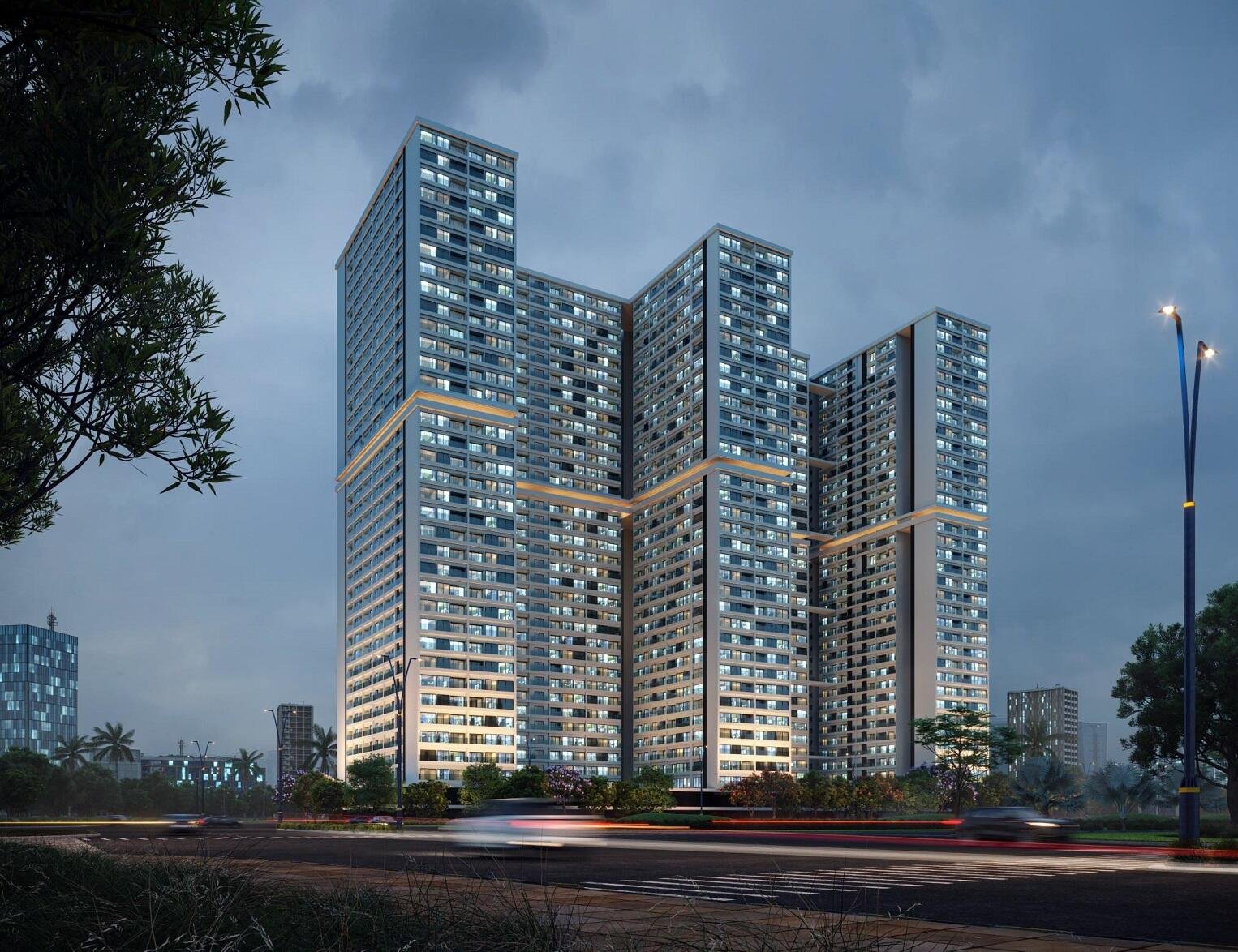
Amid all this, one name that keeps coming up in conversations with buyers evaluating siban gift city options is SIBAN – and it’s worth understanding why, without overstating it.
SIBAN’s residential offering spans configurations from studio and 1 BHK units suited to young professionals, through 2 BHK homes for small families and working couples, up to more spacious 3 BHK and 4 BHK residences for families and senior professionals wanting extra room and premium finishes.
What draws buyers isn’t any single feature but the combination – a location within GIFT City’s evolving core, a design approach oriented around future-ready living rather than a generic template, and amenities built with the specific lifestyle of IFSC-linked residents in mind: short commutes, work-from-home-friendly layouts, and shared spaces that actually get used.
For investors, the appeal ties back to everything covered above: a project positioned in a location with genuine employment-driven rental demand, in a market where completed, well-located inventory has historically seen healthy appreciation. As always, prospective buyers should evaluate any specific project, including SIBAN, against the checklist above – RERA status, delivery timeline, carpet area, and comparable pricing – rather than taking positioning at face value.
If you’re exploring new projects in gift city, it’s worth taking a closer look at what SIBAN has on offer and how it compares against your specific requirements – whether that’s a compact rental-focused 1 BHK or a larger family-oriented 4 BHK.
Frequently Asked Questions
What is the average apartment price per sq ft in GIFT City in 2026?
Standard residential apartments in GIFT City are generally priced between ₹10,000 and ₹12,000 per sq ft, with premium and high-rise projects commanding higher rates depending on location, view, and specifications.
Why do prices vary so much between projects in GIFT City?
Price differences come down to developer reputation, construction stage, amenities, configuration, floor, view, and the specific location within the township – no two projects are priced on exactly the same basis.
Is GIFT City more expensive than Ahmedabad?
On a per-sq-ft basis, GIFT City generally commands a premium over most Ahmedabad localities, largely due to its IFSC-linked employment demand and constrained residential supply.
Are under-construction flats in GIFT City a good investment?
They can offer a lower entry price and higher potential upside for investors comfortable with construction-period risk, provided the developer has a strong delivery track record and valid RERA registration.
What is the rental yield on apartments in GIFT City?
Rental yields have generally ranged between roughly 3% and 6%, supported by strong demand from IFSC-linked professionals seeking housing close to their workplace.
Which apartment configuration is best for rental income in GIFT City?
1 BHK and 2 BHK units tend to see the fastest and most consistent rental demand, given the volume of young professionals and small families relocating for IFSC jobs.
Is GIFT City a good option for NRI investment?
Many NRIs find GIFT City appealing due to its modern, professionally managed township format and IFSC-specific advantages, though it’s advisable to consult a financial or tax advisor on FEMA and regulatory specifics before investing.
How have GIFT City property prices changed over the past five years?
Prices have risen substantially from roughly ₹4,000–₹5,000 per sq ft in 2020 to the ₹10,000–₹12,000+ range seen in 2026, driven by growing IFSC employment and limited residential supply.
Should I buy a ready-to-move or under-construction flat in GIFT City?
Ready-to-move suits buyers who want certainty and immediate rental income or occupancy; under-construction can suit investors with a longer horizon comfortable with some delivery timeline risk.
What drives property prices in GIFT City?
Key drivers include IFSC status, corporate employment growth, limited residential land supply, government infrastructure support, improving connectivity, and developer reputation.
Is GIFT City a smart city?
Yes, GIFT City is developed as India’s first greenfield smart city and international finance and technology hub, with integrated infrastructure planning.
How far is GIFT City from Ahmedabad and Gandhinagar?
GIFT City is roughly 40 minutes from central Ahmedabad and around 15 minutes from core Gandhinagar, with connectivity via SG Highway, SP Ring Road, NH48, and an expanding metro link.
What are studio apartments in GIFT City best suited for?
Studio apartments typically suit young, single professionals or investors seeking a lower entry ticket size with reasonably strong rental interest.
Will GIFT City property prices keep rising?
Prices could continue to firm up given ongoing corporate demand and limited residential supply, though this depends on broader market conditions and is not guaranteed.
How do I verify if a GIFT City project is legitimate before buying?
Always check the project’s RERA registration number on the official state RERA portal, review the developer’s past delivery record, and visit the site in person or via a detailed virtual walkthrough before committing.
Final Word
Price per square foot is a useful compass in GIFT City, but it was never meant to be the whole map. The number tells you roughly where a project sits in the market; it doesn’t tell you about the view from the 22nd floor, whether the developer has ever missed a possession date, or whether the tenant demand in that specific tower is as strong as the brochure suggests.
What’s clear, looking at where GIFT City has come from and where the demand fundamentals currently point, is that this is a market that has moved past its speculative phase into something more grounded – real employment, real tenants, real completed buildings standing where there was open land just a few years ago. That doesn’t make every project a good buy, and it doesn’t remove the homework a serious buyer needs to do. But it does mean the conversation today is less about betting on a promise and more about picking the right project within a market that has largely proven itself.
If you’re evaluating your options, it’s worth reading more on Real Estate Investment in GIFT City for a deeper look at the investment case, or, if you’re investing from abroad, our GIFT City Real Estate Guide for NRI Investors walks through the specifics that matter for NRI buyers. And if you’d like to explore configurations, pricing, and availability directly, the SIBAN homepage is a good place to start comparing your options against everything covered here.
