

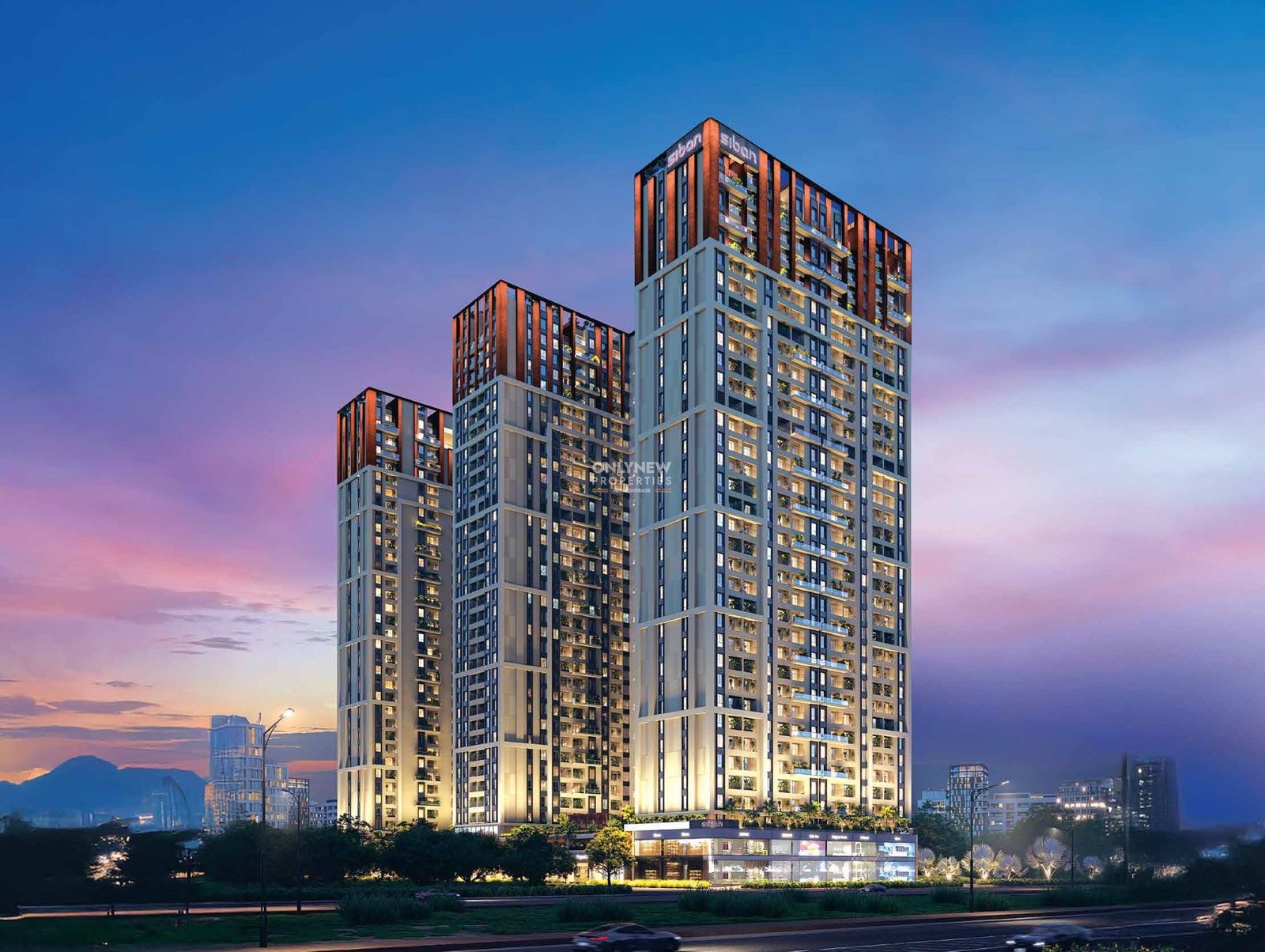
If you had ₹1 crore to put into GIFT City today, would you buy an office space or a residential apartment?
It’s not a hypothetical for a lot of people right now. GIFT City has reached a stage where both asset classes are genuinely investable, not just theoretical categories on a master plan. Office towers are leased and occupied. Residential blocks have families living in them. And that means the old advice, “just buy anything here, it’s early days,” doesn’t really apply anymore. The choice actually matters.
This decision comes up constantly in conversations with investors, NRIs looking to park capital back home, and working professionals who’ve simply outgrown renting. Commercial property in GIFT City tends to promise higher rental yields and a more institutional feel. Residential property offers a more familiar entry point, the option to live in it yourself, and a market that’s easier to exit if your plans change.
Neither is objectively “better.” What follows is a straightforward, honestly balanced look at both, so you can figure out which one actually fits your situation, not just which one sounds more exciting in a brochure.
What Makes GIFT City Different in the First Place?
Before comparing the two asset classes, it’s worth being clear on why GIFT City behaves so differently from a typical Indian real estate market.
It’s India’s only IFSC. Gujarat International Finance Tec-City is home to the country’s sole International Financial Services Centre, a regulatory zone built specifically to let global financial institutions operate under a framework closer to what they’d find in Singapore or Dubai. That single fact underpins almost every other advantage on this list.
It’s a planned smart city, not an organic one. Unlike most Indian cities that grew outward from an old town centre, GIFT City was designed from the ground up, with underground utility ducts, automated waste collection, and integrated infrastructure planned before the first tower went up. That shows up in property values because there’s less legacy infrastructure risk than in older urban pockets.
It’s a genuine financial hub now, not a plan for one. Global banks, reinsurers, asset managers, and fintech firms have moved in and are hiring. This isn’t speculative anymore; it’s a functioning employment base.
Employment growth is the real demand driver. Every large corporate lease signed inside the IFSC or SEZ effectively creates new demand, both for office space and, indirectly, for housing nearby. This is the connective tissue between the commercial and residential stories.
Infrastructure keeps closing the gap with Ahmedabad and Gandhinagar. Metro connectivity, highway access via SG Highway and SP Ring Road, and proximity to Ahmedabad’s airport have steadily reduced the “isolated township” feeling GIFT City carried a few years ago.
Residential demand is now real, not aspirational. A meaningful share of buyers today are working professionals and their families, not purely speculative investors. That matters, because end-user demand tends to be stickier than investor sentiment.
All of this sets up an interesting dynamic: commercial property in GIFT City is riding the direct wave of corporate expansion, while residential property is riding the secondary wave of people who need somewhere to live because of that same corporate expansion. Understanding that relationship helps explain why the two markets, though connected, behave quite differently on paper.
Understanding Commercial Property in GIFT City
Commercial real estate here isn’t a single category. It spans a few distinct formats, and the differences matter more than most first-time investors expect.
Office spaces are the dominant commercial asset class in GIFT City, ranging from compact units of a few hundred square feet to full-floor plates for large corporate occupiers. As of 2026, office prices for buying generally fall in the ₹6,000 to ₹12,000 per sq ft range, with premium buildings and prime floors pushing toward the upper end or beyond, depending on SEZ status, finishing, and location within the towers.
Retail spaces cater to the growing base of residents and office workers who need everyday amenities within the township, cafes, convenience stores, salons, and similar formats. Retail rentals tend to sit in a different band than office rentals and depend heavily on footfall and ground-floor visibility.
Business parks and larger commercial campuses are aimed at bigger occupiers, corporate offices setting up substantial operations rather than small teams. These typically involve larger ticket sizes and longer lease commitments from tenants.
Commercial leasing structures in GIFT City generally fall into SEZ and non-SEZ (domestic tariff area, or DTA) categories. SEZ units can only be leased to SEZ-registered entities, which narrows the tenant pool but often commands a premium given the tax advantages those tenants receive. Non-SEZ, or domestic zone, commercial space has a broader potential tenant base and somewhat more leasing flexibility.
Investment characteristics of commercial property tend to favour income-focused investors. A pre-leased office unit, one that already has a tenant in place, offers immediate rental income and a relatively predictable yield, though the price you pay reflects that certainty. A raw shell unit, bought before fit-out or tenancy, generally costs less upfront and offers more room for capital appreciation as the building matures and gets occupied, but comes with more uncertainty about how quickly you’ll find a tenant.
Advantages of commercial property include meaningfully higher headline rental yields than residential, tenants who are typically businesses rather than individuals (which can mean more formal, longer-duration leases), and direct exposure to GIFT City’s core growth story, corporate expansion inside the IFSC.
Challenges are equally real. Commercial property usually requires a larger entry ticket size. Vacancy risk is more visible, when a unit sits empty, you earn nothing while still paying maintenance and possibly loan interest. The resale and rental markets are narrower than residential, since your buyer or tenant pool is limited to businesses rather than the broader population. And SEZ-specific units carry additional leasing restrictions that residential buyers never have to think about.
Understanding Residential Property in GIFT City
Residential real estate in GIFT City spans a familiar range of configurations, but the demand dynamics behind each one are shaped specifically by who’s moving to this township and why.
Studio apartments are the most compact and affordable entry point, generally attracting young, single professionals or investors chasing a smaller ticket size with reasonable rental interest from that same demographic.
1 BHK apartments are a strong middle ground, popular with young couples and professionals who want a bit more space than a studio, and consistently in demand among investors focused on rental yield, since this segment leases quickly given the volume of single professionals and young couples relocating for IFSC jobs.
2 BHK apartments are arguably the most broadly in-demand configuration in the township. They suit small families, working couples who want a home office, and investors looking for a balance between rental demand and resale liquidity. If you’re buying your first residential unit in GIFT City and want the safest, most broadly appealing choice, this is usually it.
3 BHK apartments appeal to established families and senior professionals who prioritise space, floor level, and amenities over price efficiency. Many are also favoured by senior executives whose companies provide housing allowances, which supports fairly stable rental demand at this level.
4 BHK and larger units sit at the luxury end, appealing to HNIs, senior leadership relocating with families, and NRIs looking for a flagship home rather than a rental-yield play. These are less about cash flow and more about long-term capital appreciation and lifestyle.
The rental market for residential property in GIFT City is underpinned almost entirely by the working population inside the IFSC and SEZ. Many companies actively support or subsidise housing for employees who live close to work, which keeps vacancy periods relatively short for well-located, well-maintained units.
Lifestyle considerations matter more here than in a typical Indian residential market, because GIFT City is still building out its social infrastructure, schools, healthcare, and retail, even as its physical and financial infrastructure races ahead. Families weighing a residential purchase should factor in how “finished” they need the surrounding city to feel before they move in.
End-user demand is the defining feature of this segment right now. Unlike the early speculative years, a meaningful share of today’s residential buyers actually plan to live in what they’re buying, or are buying specifically to house a family member working inside GIFT City. That’s a healthier demand base than pure investor flipping, and it tends to support steadier, if less explosive, price growth.
Commercial vs Residential: Side-by-Side Comparison
| Factor | Commercial Property | Residential Property |
| Entry cost | Higher; typically ₹6,000–₹12,000+ per sq ft, often larger minimum unit sizes | Lower; typically ₹10,000–₹13,000 per sq ft, but smaller configurations keep total ticket size accessible |
| Rental yield | Generally higher; roughly 6–9% gross in many cases, with some premium pre-leased units cited higher | Generally lower; roughly 3–6% gross, depending on configuration and location |
| Capital appreciation | Tied closely to IFSC/SEZ corporate growth and occupancy; can be strong but less predictable | Tied to overall employment growth and end-user demand; steadier, more broad-based |
| Liquidity | Narrower buyer and tenant pool (businesses only); resale can take longer | Broader buyer and tenant pool; generally easier to resell or re-lease |
| Vacancy risk | More visible and costlier; a vacant unit earns zero while carrying costs | Lower on average, given consistent demand from relocating professionals |
| Maintenance | Often higher, especially for premium Grade-A specifications | Generally lower, standard residential upkeep |
| Financing | Commercial property loans often carry different terms and slightly higher rates | Standard home loan financing widely available |
| Tenant stability | Businesses on formal leases; can be long-term but concentrated risk if tenant exits | Individual tenants; shorter lease cycles but easier to re-let quickly |
| Exit strategy | Sale to another investor or business; smaller pool of buyers | Sale to end users or investors; larger, more liquid resale market |
| Overall risk | Higher, concentrated in fewer, larger-ticket assets | Lower, spread across a broader, more familiar asset type |
| Long-term growth | Strong if IFSC expansion continues; more cyclical | Steadier, supported by ongoing population and employment growth |
| Passive income | Higher potential income per rupee invested, if occupied | Moderate, dependable income with less month-to-month volatility |
| Self-use potential | None, purely investment-oriented | High, can serve as a home as well as an asset |
| Scalability | Easier to scale capital into fewer, larger units | Requires multiple units to deploy similar capital, more management overhead |
This table is a starting point, not a verdict. The right column for you depends heavily on your capital, risk tolerance, and whether you want a place to live or purely an income-generating asset.
Rental Yield: Commercial vs Residential, Honestly
This is where the two asset classes diverge most clearly, and where it’s worth being careful about the numbers you see floating around.
Commercial rental yields in GIFT City are commonly cited in the 6% to 9% gross range for Grade-A office space, particularly units already leased to established financial or corporate tenants. Some more bullish market commentary points to yields as high as 10–12% for specific premium assets, but these figures tend to be best-case scenarios tied to a strong tenant, a favourable lease, and low vacancy, not a guaranteed baseline across the market. SEZ-zoned space, leased to IFSC-registered entities, often commands rents at the higher end of this range, given the tax advantages those tenants enjoy.
Residential rental yields typically fall in the 3% to 6% gross range, with 1 BHK and 2 BHK units generally performing at the upper end of that band due to strong demand from relocating professionals. This is still meaningfully above the 2–3% yields typical of many established Indian metros, but it’s a different order of magnitude from what commercial property can offer.
The honest takeaway: commercial property generally does offer a higher headline yield, often by a factor of nearly two. But that yield comes with more variability, higher vacancy risk when it does go wrong, and a much smaller pool of potential tenants if your current one leaves. Residential yields are lower, but historically steadier and easier to protect through a broader tenant base. Neither number should be taken as a guarantee; both depend heavily on the specific project, location, and tenant quality.
Capital Appreciation: What’s Actually Driving Prices Up
Price appreciation in GIFT City, across both asset classes, comes down to a fairly small number of interconnected drivers.
Infrastructure completion is probably the single biggest factor. As more buildings actually get finished, roads get completed, and the metro extension matures, the “under construction city” perception fades, and that alone tends to support values across both commercial and residential segments.
Business growth inside the IFSC and SEZ drives commercial appreciation most directly. Every new large corporate lease adds credibility and occupancy to the commercial story, and that demand can push both rents and capital values for well-located office space.
Supply constraints matter differently for each asset class. GIFT City’s master plan allocates a large share of land to commercial and institutional use, keeping residential supply comparatively tight relative to demand, which has been a meaningful support for residential prices. Commercial supply, meanwhile, is expanding steadily as new towers complete, which could moderate the pace of commercial appreciation compared to the earlier, more supply-constrained years.
Government support for the IFSC framework, including extended tax incentives for businesses operating there, continues to underpin investor confidence in the underlying growth story, even if those specific tax benefits accrue to businesses rather than individual property buyers.
Future development plans, including continued metro expansion and additional social infrastructure, could support appreciation across both segments over the medium term, though the earliest, easiest gains from GIFT City’s initial development phase have largely already played out. Investors entering now should expect steadier, more incremental appreciation going forward rather than the sharper early-stage gains some earlier buyers captured.
It’s worth being cautious here: headline appreciation figures circulating in some marketing materials, citing very high percentage gains over short periods, should be treated with scepticism unless backed by verifiable, project-specific data. Real appreciation in a maturing market like GIFT City in 2026 is more likely to track steady, employment-driven demand than to repeat the sharper gains of the earlier speculative years.
Which Has Lower Risk: Commercial or Residential?
There’s no clean answer here, but the risk profiles are genuinely different, and it’s worth being specific about how.
Commercial property concentrates risk. You’re typically deploying more capital into fewer units, with income dependent on a smaller number of tenants. If a single large tenant vacates a commercial unit, you could face a real income gap while still carrying costs, and finding a replacement tenant takes time in a market where the buyer and tenant pool is inherently narrower than residential.
Residential property spreads risk more naturally. Even within a single unit, the tenant pool, working professionals broadly employed across the IFSC ecosystem, is larger and more diverse than the pool of businesses that might lease a comparable commercial unit. If one tenant leaves, replacing them is generally faster.
Liquidity risk favours residential. If you need to exit an investment quickly, residential property in GIFT City has a broader base of potential buyers, both end users and investors, compared to commercial property, which appeals mainly to other investors or businesses looking to buy rather than lease.
Regulatory risk is more relevant to commercial, particularly SEZ-zoned units, where leasing is restricted to SEZ-registered entities. That’s a real constraint that residential buyers simply don’t have to think about.
Market maturity cuts both ways. Commercial property is riding the more visible, headline growth story, but that also means it’s more exposed if corporate expansion inside the IFSC slows for any reason. Residential demand, tied more to broad-based employment and population growth, tends to be a bit more insulated from any single sector’s slowdown.
On balance, residential property is generally the lower-risk option for most individual investors, largely because of its broader tenant and buyer pool. Commercial property can offer a stronger return, but that return comes with genuinely higher concentration risk that shouldn’t be glossed over.
Which Is Better For You? A Buyer-by-Buyer Breakdown
First-time investors are usually better served by residential property. The entry ticket is more manageable, the tenant pool is broader, and the learning curve is gentler than navigating SEZ leasing restrictions or commercial tenant negotiations.
NRIs often gravitate toward residential property for its “lock and leave” simplicity and broader resale market, though some NRIs with larger capital and a higher risk appetite do consider commercial units specifically for the higher yield, particularly SEZ-zoned space, given that GIFT City’s SEZ framework allows for relatively straightforward NRI participation in commercial purchases. It’s worth speaking with a qualified advisor on the specific FEMA and regulatory considerations either way.
Working professionals relocating for a job inside GIFT City are almost always better suited to residential property, ideally a 1 BHK or 2 BHK that can double as a home now and a rental asset later if their circumstances change.
Families planning a longer-term move should stay firmly in the residential category, prioritising 3 BHK or larger configurations in projects with good access to schools and daily conveniences.
HNIs are the group most likely to genuinely benefit from a mixed allocation, some capital in premium residential for stability and self-use optionality, some in commercial for higher yield and direct exposure to the IFSC growth story. This is also the group best positioned to absorb commercial property’s higher entry ticket and concentration risk.
Passive income investors need to weigh yield against effort. Commercial property offers a higher headline yield but demands more active management around tenant relationships and vacancy risk. Residential property offers a more genuinely “passive” experience for most buyers, given the broader tenant pool and simpler leasing process.
Long-term investors with a 5+ year horizon and reasonable risk tolerance may lean toward commercial property specifically to capture the IFSC’s ongoing expansion story, provided they’ve sized the investment appropriately within a broader portfolio.
Retirement planning generally favours residential property, or a smaller, well-located commercial unit at most. Stability and predictable income tend to matter more than maximising yield when the goal is long-term financial security rather than aggressive growth.
Common Investment Mistakes in GIFT City
1. Chasing headline yield numbers without checking the source. Some marketing materials cite commercial yields well above what’s realistic for most buyers; always ask for project-specific, verifiable data rather than market averages.
2. Ignoring SEZ leasing restrictions before buying commercial property. SEZ units can only be leased to SEZ-registered entities, a critical detail that dramatically narrows your tenant pool and that many first-time commercial buyers overlook.
3. Underestimating vacancy risk in commercial property. A vacant commercial unit generates zero income while still carrying maintenance and financing costs; factor a realistic vacancy buffer into any yield projection.
4. Not verifying RERA registration. Every legitimate residential project, and applicable commercial developments, should carry a valid RERA number; always check independently rather than relying on a broker’s assurance.
5. Confusing built-up area with carpet area. This inflates the apparent value of a unit and understates the true price per usable square foot; always ask for a clear carpet area breakdown.
6. Overlooking the difference between pre-leased and raw shell commercial units. Pre-leased units offer immediate income at a premium price; raw shell units cost less but carry tenancy uncertainty. Buyers sometimes don’t realise which one they’re actually purchasing.
7. Assuming tax incentives apply directly to individual property buyers. Most of GIFT City’s tax benefits are structured for businesses operating within the IFSC, not for individual investors buying property; the benefit to buyers is indirect, through stronger tenant demand.
8. Treating GIFT City appreciation as guaranteed or explosive. The easiest early-entry gains have largely already occurred; expecting the same pace of appreciation going forward isn’t realistic, even if steady growth remains plausible.
9. Skipping a proper comparison across multiple projects. Price per sq ft, amenities, and developer track record vary significantly even within the same zone; comparing only one or two listings leads to poor benchmarking.
10. Not accounting for total costs beyond the purchase price. Stamp duty, registration, GST on under-construction property, and ongoing maintenance can add a meaningful percentage on top of the quoted price for both asset classes.
11. Buying commercial property without a clear tenant strategy. Some investors purchase commercial units speculatively without a realistic plan for finding and retaining tenants, which can leave capital tied up in a non-performing asset.
12. Ignoring liquidity needs. Commercial property, and to a lesser extent premium residential property, can take longer to sell than expected; buyers who might need to exit within a few years should weight this heavily in their decision.
Checklist Before Investing in GIFT City
● Decide whether your priority is rental yield, capital appreciation, or self-use, since this shapes the commercial vs residential decision more than any other factor
● Verify RERA registration and cross-check project details independently
● For commercial property, confirm SEZ vs non-SEZ status and understand the leasing restrictions that come with it
● For pre-leased commercial units, review the existing lease terms, tenant profile, and remaining lease duration
● Confirm carpet area, not just built-up or super built-up area, for residential purchases
● Get a full breakdown of additional costs, stamp duty, registration, GST, and maintenance
● Compare price per sq ft across multiple comparable projects in the same zone
● Review the developer’s delivery track record and past project performance
● Assess realistic vacancy risk and build a buffer into any yield projection, especially for commercial property
● Understand the payment plan structure for under-construction purchases
● Visit the site in person, or arrange a detailed virtual walkthrough if buying remotely
● For NRIs, consult a qualified advisor on FEMA compliance and any zone-specific investment rules
● Consider your investment horizon honestly; 3-year and 7-year strategies favour different asset types
Why Many Buyers Are Choosing SIBAN
Among the residential options investors and end users compare in GIFT City, SIBAN comes up often, and it’s worth understanding the reasoning without overselling it.
SIBAN’s residential portfolio spans studio and 1 BHK units suited to young professionals entering the market, through 2 BHK homes for small families and working couples, up to more spacious 3 BHK and 4 BHK residences for families and senior professionals who want additional room and premium finishes.
What tends to draw buyers isn’t a single standout feature but the combination: a location within GIFT City’s developing core, thoughtful lifestyle amenities designed around the realities of IFSC-linked living, short commutes, work-friendly layouts, and shared spaces that see genuine daily use, plus strong connectivity to the metro and surrounding highway network.
For investors specifically weighing residential against commercial exposure, SIBAN’s positioning fits the broader case for residential made throughout this article: lower entry ticket, broader tenant and resale pool, and long-term potential tied to GIFT City’s steady, employment-driven growth rather than a narrower commercial tenant story. As with any project, prospective buyers should evaluate SIBAN against the same checklist covered above, RERA status, delivery timeline, carpet area, and comparable pricing, rather than taking positioning at face value.
If you’re weighing a 1 BHK against a 2 BHK specifically, our detailed comparison, 1 BHK vs 2 BHK in GIFT City, Which Apartment Gives Better ROI?, breaks that decision down further.
Frequently Asked Questions
Is commercial or residential property better in GIFT City?
Neither is universally better; commercial property generally offers higher rental yield but carries more concentration and vacancy risk, while residential property offers steadier, broader-based demand with lower entry costs and self-use potential.
What is the average rental yield for commercial property in GIFT City?
Commercial rental yields in GIFT City are commonly cited in the 6% to 9% gross range, with some premium pre-leased units reported higher, though actual returns depend heavily on tenant quality, lease terms, and vacancy.
What is the average rental yield for residential property in GIFT City?
Residential rental yields typically range from 3% to 6% gross, with 1 BHK and 2 BHK units generally performing at the higher end due to strong demand from relocating professionals.
Can NRIs invest in commercial property in GIFT City?
Yes, NRIs can invest in commercial property in GIFT City, including SEZ-zoned units in many cases, though it’s advisable to consult a qualified advisor on FEMA compliance and zone-specific regulations before proceeding.
What is the difference between SEZ and non-SEZ commercial property in GIFT City?
SEZ commercial property can only be leased to SEZ-registered entities and often carries a rental premium due to tenant tax advantages, while non-SEZ (domestic zone) property has a broader potential tenant base and more leasing flexibility.
Is residential property in GIFT City a good investment for first-time buyers?
Yes, residential property is generally more accessible for first-time investors, offering a lower entry ticket, broader tenant and resale pool, and a simpler buying process than commercial property.
How much does office space cost in GIFT City in 2026?
Office space for purchase in GIFT City generally ranges from roughly ₹6,000 to ₹12,000 per sq ft, depending on zone, building quality, floor level, and developer reputation.
How much does a residential apartment cost in GIFT City in 2026?
Residential apartments typically range from roughly ₹10,000 to ₹13,000 per sq ft, with premium and high-rise projects commanding more depending on location and specifications.
Which is riskier, commercial or residential property in GIFT City?
Commercial property generally carries higher risk due to a narrower tenant and buyer pool and more visible vacancy exposure, while residential property tends to be lower risk given its broader demand base.
Should HNIs invest in both commercial and residential property in GIFT City?
Many HNIs do choose a mixed allocation, using commercial property for higher yield exposure to the IFSC growth story and residential property for stability, self-use optionality, and easier liquidity.
What drives capital appreciation in GIFT City?
Key drivers include continued infrastructure completion, corporate expansion inside the IFSC and SEZ, constrained residential land supply, government policy support, and improving metro and highway connectivity.
Is GIFT City real estate suitable for passive income investors?
Residential property generally offers a more genuinely passive income experience given its broader tenant pool, while commercial property can offer higher income but typically requires more active management around tenant relationships and vacancy risk.
Are there tax benefits for individual property investors in GIFT City?
Most of GIFT City’s tax incentives are structured for businesses operating within the IFSC rather than for individual property buyers, who remain subject to standard capital gains tax, stamp duty, and applicable GST.
What is the difference between pre-leased and raw shell commercial units?
Pre-leased units already have a tenant in place and offer immediate income at a price that reflects that certainty, while raw shell units are typically cheaper upfront but carry the uncertainty of finding a tenant after fit-out.
Is now a good time to invest in GIFT City real estate?
2026 is generally seen as a more mature, employment-driven phase for GIFT City compared to its earlier speculative years; it can still be a reasonable entry point for both commercial and residential investors, though the fastest early-stage gains have largely already occurred.
Conclusion
There isn’t a single right answer to the commercial versus residential question in GIFT City, and anyone who tells you otherwise is probably selling something.
Commercial property offers a genuinely higher rental yield and direct exposure to the IFSC’s corporate growth story, but it comes with real concentration risk, a narrower tenant pool, and leasing restrictions that residential buyers never have to navigate. Residential property offers steadier, more broadly supported demand, an easier resale market, and the option to actually live in what you buy, at the cost of a lower headline yield.
The more useful question isn’t “which one performs better” in the abstract. It’s “which one fits my capital, my risk appetite, and my timeline.” A first-time investor with ₹1 crore and a five-year horizon is likely better served by residential property than by stretching into a commercial unit they don’t fully understand. An HNI with a larger, more diversified portfolio might reasonably hold both.
Whatever direction you lean, the fundamentals matter more than the marketing. Verify RERA status, understand the zone-specific rules that apply, get real numbers instead of best-case projections, and size your investment to something you can hold through a normal market cycle, not just the optimistic scenario.
For a broader look at the investment case for the city as a whole, Real Estate Investment in GIFT City is a useful starting point, and our GIFT City Real Estate Guide for NRI Investors covers the specifics that matter for buyers investing from abroad. If you’re still getting oriented to the city overall, the GIFT City Complete Guide 2026 walks through the fundamentals in more depth. And if residential is the direction you’re leaning, the SIBAN homepage is a good place to compare configurations and pricing against everything covered here.
